Why Crew Training for Events Is Critical to Safe, High-Performing Bar Operations

In the live events sector, execution is everything. Timelines are tight, environments are high-pressure, and there is little margin for error. When you are building, stocking, and operating temporary bar infrastructure for thousands of attendees, the quality of your workforce directly determines the outcome. That is why crew training for events is not a 'nice to have' - it is a commercial and operational necessity.
For companies delivering professional bar builds and operations at festivals, stadium shows, and large-scale events, training underpins safety, efficiency, compliance, and customer experience.

Why Effective Crew Training for Events Is Essential
1. Safety Is Non-Negotiable
Temporary bar structures involve manual handling, equipment installation, use of power tools, and high-volume stock movement. Without structured, expert training, risk multiplies.
Effective crew training for events ensures that every team member understands:
Safe build and dismantle procedures
Correct manual handling techniques
Risk assessment and hazard awareness
Incident reporting protocols
A well-trained crew does not just do the job, they understand why procedures exist and how to apply them under pressure. This reduces accidents and ensures compliance with health and safety regulations.
At large-scale live events, safety failures can escalate rapidly. Proper training mitigates those risks before they materialise.

2. Build Quality Impacts Operational Success
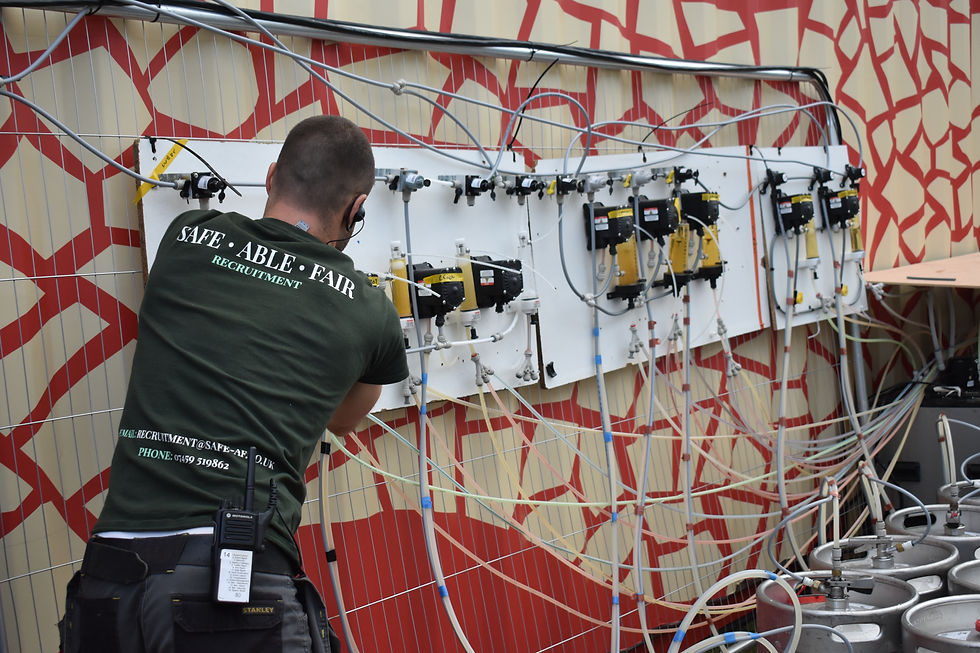
Temporary bars are often constructed within tight load-in windows. Precision during the build phase directly affects service speed, stock control, and system reliability once doors open.
Crew training for events ensures that teams can:
Assemble bar infrastructure accurately and efficiently
Install dispense systems correctly
Organise keg and storage areas for optimal workflow
Identify and resolve build issues, if any, before service begins
A poorly built bar leads to bottlenecks, stock loss, technical faults, and frustrated customers (and bartenders!). Professionally trained crew prevents those inefficiencies from occurring in the first place.

3. Service Performance Drives Revenue
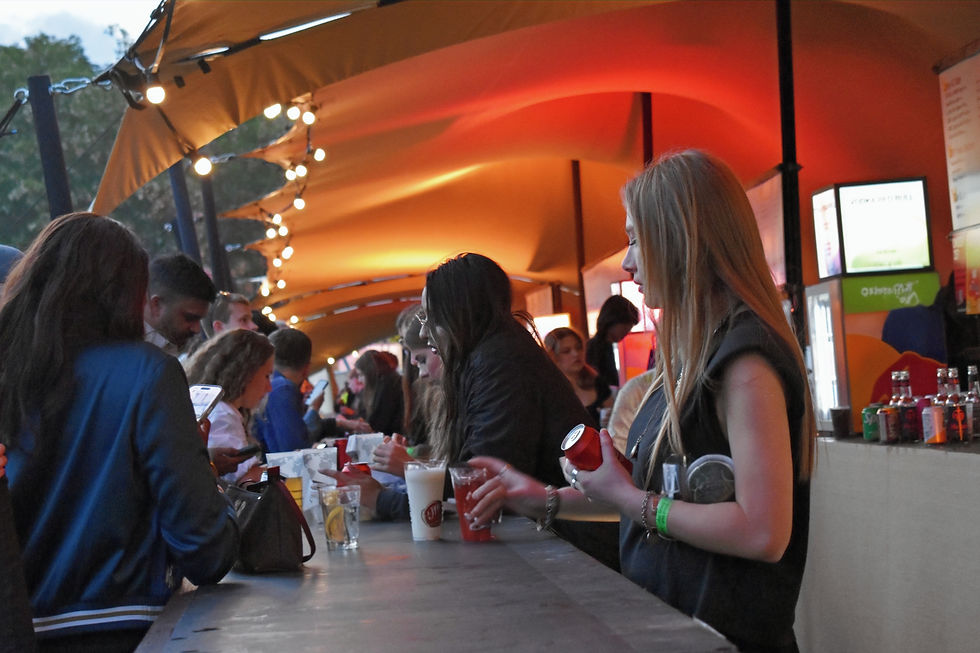
At live events, bars are revenue engines. Service speed, accuracy, and professionalism directly influence spend per head and queue abandonment rates.
Well-trained bar crew understand:
High-volume service techniques
Cashless and POS system operation
Stock rotation and waste reduction
Responsible alcohol service
Customer engagement under pressure
When teams are confident and competent, service flows. When training is inconsistent, service slows, errors increase, and revenue is lost. For event organisers and bar operators, investing in crew training for events is an investment in commercial performance.
4. Consistency Builds Reputation
Events are not one-off transactions; they are relationship-driven projects. Organisers expect consistency across multiple sites, tours, and festival seasons.
Training is what standardises performance. At Safe Able & Fair Recruitment, consistent, expert training is at the core of what we do.
We invest heavily in the personal and professional development of our crew through structured training programmes. This ensures that every crew member arrives on your project prepared, capable, and safe to work. Better training benefits our team, and it delivers better results for our clients.
By embedding clear standards into every build, stock, and operational process, we create reliability. Clients know what to expect. Site managers know how teams will perform. Crew members understand their responsibilities. That consistency is what protects brand reputation at scale.
5. Professional Development Improves Retention
The live events industry is demanding. Crew retention can be challenging without a strong development framework.
When training is prioritised:
Crew feel valued and invested in
Skills improve over time
Leadership pathways become clear
Morale increases
This results in stronger team cohesion and lower turnover. In turn, experienced crews return season after season, bringing institutional knowledge and operational maturity to each project.
In other words, effective crew training for events strengthens both short-term delivery and long-term workforce stability.

6. Prepared Teams Reduce On-Site Stress
Events operate to immovable deadlines. There is no room for uncertainty on show days.
When crews are properly trained:
Supervisors spend less time correcting mistakes
Build timelines are more accurately met
Safety briefings are understood and implemented
Operational troubleshooting becomes proactive, not reactive
Prepared teams create calmer, more controlled working environments. That stability allows project leads to focus on strategic oversight rather than constant problem solving.
The Bottom Line
In the high-pressure environment of live events, training is the foundation that everything else sits on. Safety, efficiency, revenue generation, and reputation all depend on workforce capability.
Crew training for events is not simply about instruction - it is about professional standards, risk management, and delivering measurable results.
When every crew member arrives on-site prepared, capable, and safe to work, the difference is visible in every build, every service window, and every satisfied customer. In an industry where performance is public and immediate, that difference matters.

Comments